Expanding the
Language of Color
Offset printing has significant limitations in reproducing the full range of colors seen by the human eye and created by photography or artistic techniques, thus affecting the quality of printed books.

To address this issue, Trifolio launched the AreaW4 project in 2009. This initiative aims to surpass the standard four-color printing process by extending research and production times, and by integrating advanced technologies with our expertise to achieve superior quality.
The AreaW4 method, resulting in Wide CMYK Performance, enhances four-color printing and allows for custom colors beyond the traditional process. Unlike the market trend towards cost-cutting and automation, AreaW4 prioritizes print quality, offering tailored solutions for customer projects.

An offset printing process that exceeds ISO standards.


It operates as a workshop for innovative ideas utilizing creative methods for converting and processing RGB images, as well as employing different pigments.
Trilab’s advanced multicolor technology makes it possible to achieve outstanding color reproductions in print that are tailored to the customer’s taste and wishes.
It overcomes the qualitative and color limitations previously achieved with the usual standard reproduction techniques.


Trilab allows clients to collaborate with the Trifolio team to create custom colors tailored to their specific needs.
By moving beyond the traditional four-color process, this system preserves the artist’s original colors and achieves shades that are impossible to replicate within ISO standards.
Developed by Trifolio, it continuously evolves, blending expert intuition with our technological advancements to produce high-quality books.
FROM
YOUR FILE
TO
FINE ART
Discover how we transform your images into their full potential with our exclusive Lab approach.
Send us four relevant RGB files — we’ll process them for free, so you can see the difference for yourself.
WHY
An in-depth exploration of colour theory, printing techniques and technologies
colour theory
Light and temperature
Color theory is a branch of optics that studies the classification of colors and their perception by the human eye.
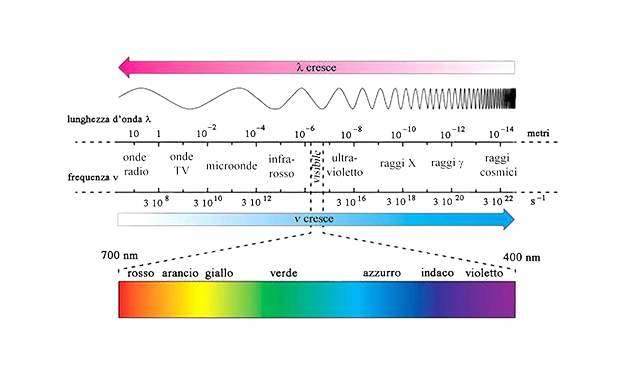
Light is electromagnetic radiation emitted by a light source with a wavelength of between 380 and 780 nanometers; it occupies the portion of the electromagnetic spectrum between the infrared and the ultraviolet.
The light that we perceive as white is in reality a blend of different wavelengths in this interval of visible light, from violet to red. Proof of this is provided by the fact that when light passes through a transparent prism, it is refracted into a spectrum of color; we also see this when light passes through drops of water suspended in the atmosphere, where it is refracted into a rainbow.
Color temperature
The color temperature of a light source is the numerical measure of its chromatic appearance, or hue. It is based on the principle that any object, if heated to a sufficiently high temperature, gives off light. The color of that light varies in a predictable manner with the increase in temperature: the object passes gradually from red to orange to yellow and then white and finally to bluish white. Thus the color temperature is the temperature, expressed in degrees kelvin (K), at which the color of the object exactly matches that of the light source.

colour theory
Color rendering index (CRI or ra)
The color rendering index (CRI or Ra) provides indications about how a particular light source renders the colors of the objects illuminated. It is a system derived from experiments carried out on vision to assess the impact of different light sources on the perceived color of objects and surfaces.
The physical properties of the material
The characteristics of the material are a decisive factor in how color is perceived. In fact, objects illuminated by light react in different ways according to their substance: an object that absorbs all the wavelengths of visible light appears black; if, on the contrary, it absorbs none of them, it appears white; if it is selective in the wavelengths it absorbs, it appears in one of the millions of colors that we find in nature.
colour theory
The physiology of the eye
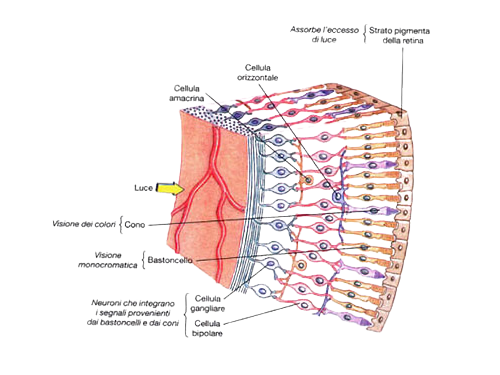
The eye, the principal sense organ of our visual system, receives information from the external environment through light. The crystalline lens focuses the light and the retina detects it by means of a layer of receptors, called cones and rods, which is connected to the brain by the optic nerve.
The rods are used for vision in low-light conditions but are not particularly sensitive to color; cones, on the other hand, come in three types, which are each sensitive to different wavelengths (red, green, and blue), and determine with a certain precision the perception of the hue.
Despite this ability to distinguish variation in tone, the perception of color remains a subjective matter, dependent on the viewer’s concentration, habits, environmental conditions, and more.
colour theory
Additive and subtractive synthesis
A color can be determined in two ways: by varying the light (additive synthesis) or by varying the characteristics of the material (subtractive synthesis).
Three light sources, each of a single and specific wavelength that correspond to red, blue, or green light, can be combined in different combinations and quantities (i.e., intensity) in such a way as to obtain different shades of color, visible to the eye when a white material is illuminated with this beam. It is the principle on which digital video and still cameras operate, called additive synthesis.
If instead we use white light (i.e., light covering the whole spectrum of visible wavelengths), and tint the white material with three colors (blue, yellow, and red) in different quantities, the result is also a range of colors, but it has been created by partially absorbing, or subtracting, the white light. This is the principle on which printing, painting, and photographic film and film stock are based, called subtractive synthesis.
If we estimate the number of colors in existence to be 7.5 million, an empirical calculation leads to the following considerations: humans are capable of distinguishing around a third of this number (2.5 million) technologies based on additive synthesis reproduce around a quarter (1.8 million) technologies based on subtractive synthesis reproduce 1.3 million at the most the standard offset system does not exceed 400 thousand colors.

It is clear that the photographic technique, although far from being able to reproduce all the variations in hue that exist, is not far from what the human eye is able to perceive. A standard print on paper, by contrast, has considerable limitations, as it is not even able to reproduce a third of the colors that may be present in a fresco or a painting or a fifth of those possible in a photograph.
colour theory
Wide CMYK Performance
In analyzing color theory, it seems evident that the technique and technology of offset printing have severe limitations in the reproduction of both the colors perceptible by the human eye and of those produced in photography or by artistic techniques in general.
These limitations have a negative effect on the quality of a printed book. As Trifolio’s mission is to create books to the highest- possible standard, this critical issue has been at the heart of the company’s development of its production.
In 2009, the company launched the AreaW4 project, a locus of innovation and technological experimentation, a workshop of ideas and experiences that Trifolio regards as vital in order to offer its clients a quality of printing that is superior to that of its competitors.
While the market’s general tendency is to direct innovation toward containment of costs, reduction in production times, and simplification and automation of the process—with a consequent lowering of the bar in standards of quality—AreaW4 invests in the future: it has abandoned the ISO standard and trends set by the market; extended the time for research and production; and combined human sensibility with new technologies and state-of-the-art materials to surpass standard production results.
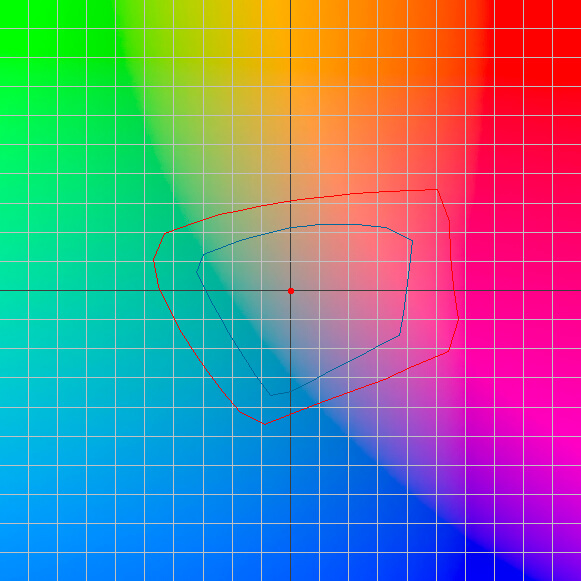
The primary objective of AreaW4 is to increase the number of tones (i.e., colors) that can be reproduced in offset printing when using the four basic CMYK pigments. Currently, the spectrum has been extended by 40 percent with regard to the ISO standard. This extension permits the reproduction of shades of color that do not exist or cannot be reproduced in traditional printing, guaranteeing an appreciable increase in the resolution and depth of the printed images.
Wide CMYK Performance is the result of the AreaW4 method, which is a synthesis of extended performance in four-color printing and an open-minded approach to the use of techniques and choice of materials in the printing process.
The technique developed by Trifolio is based on methods of conversion and processing of images (of necessity, RGB files), the use of nonstandard pigments, and the minimization of margins of error, achieved through analysis using algorithms derived from multiple readings and careful control of environmental variables. AreaW4 is a constantly evolving project, a quality brand in the sector of offset printing, and a source of pride for the Trifolio company.